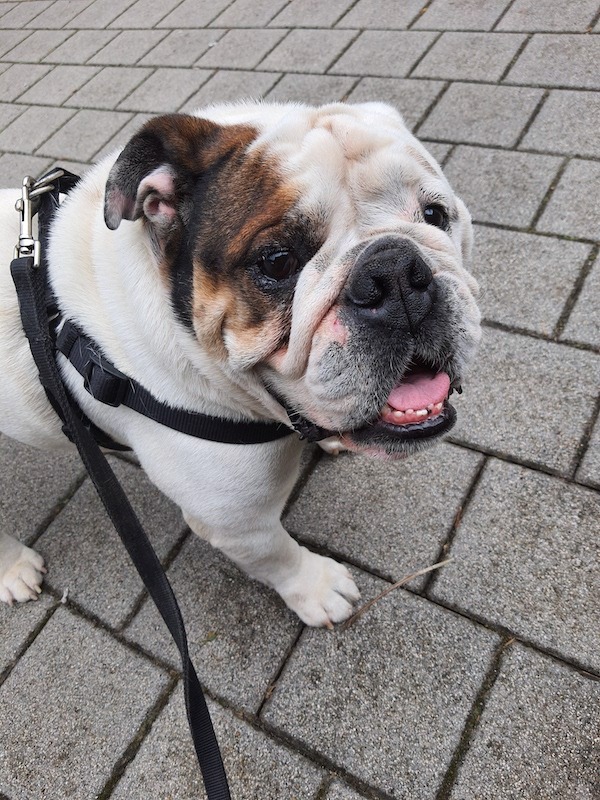
Bulldog
Trait scores
Health risk profile
Conditions below are ranked by documented prevalence and severity in the Bulldog. Risk level drives both veterinary costs and insurance pricing.
| Condition | Risk | What to know |
|---|---|---|
| Brachycephalic obstructive airway syndrome (BOAS) | high | Severely shortened airways limit exercise and heat tolerance; airway surgery is common. |
| Hip dysplasia | high | Bulldogs post among the worst hip scores of any breed in OFA data. |
| Skin fold dermatitis | high | Facial wrinkles and tail pockets need daily cleaning to prevent infection. |
| Heatstroke | high | Inability to cool efficiently makes heat a genuine emergency, even on mild days. |
| Cherry eye and eye disease | moderate | Prolapsed third-eyelid gland and corneal ulcers occur frequently. |
Pet insurance for a Bulldog
Insurers price a Bulldog from the breed's documented claims profile — here, 4 high-risk conditions, led by Brachycephalic obstructive airway syndrome (BOAS) and Hip dysplasia. Enrolling early matters more than shopping hard: no carrier covers a condition once it is diagnosed.
Annual cost of ownership
Excluding insurance, the recurring cost of a Bulldog is driven by how much it eats — which scales with body weight — and how much grooming it needs. At 40–50 lbs and a grooming score of 2/5, the Bulldog sits below the average dog on grooming spend. Chronic conditions from the risk table above can add substantially to the medical side of the budget — one reason breed-matched insurance matters. For the component-by-component breakdown, see the average cost of owning a dog, and model your own numbers with thecost of ownership calculator.
About the Bulldog
The Bulldog was created in England for bull-baiting and reinvented in the nineteenth century as a companion, trading aggression for a famously gentle, people-focused disposition. It is a low-energy, low-barking dog that thrives in apartments and loves children, but its anatomy drives some of the highest veterinary costs in the species: airway problems, joint disease, skin-fold infections, and heat intolerance are the norm. Choose a breeder prioritizing health over exaggeration, budget generously for insurance, and keep the dog lean and cool.
Origin: England
Temperament
Related reading for Bulldog owners
- How much does pet insurance cost for a Bulldog?
- Bulldog hereditary conditions and what insurers actually cover
- Getting allergy and skin treatment covered
- Why Bulldog premiums change with your zip code
- The most expensive dog breeds to insure, and why
- What Bulldog coverage costs past age 8
- What counts as pre-existing before you enroll
Bulldog FAQ
How long do Bulldogs live?
The typical Bulldog lifespan is 8–10 years. Diet, weight management, and screening for the breed's known hereditary conditions have the largest measurable effect on longevity.
How much does pet insurance cost for a Bulldog?
There is no published breed-level price for pet insurance, so we do not quote one. NAPHIA's 2026 industry report puts the US average at $836 a year — about $70 a month — for accident-and-illness coverage on a dog, and insurers price above or below that line based on your dog's age, your ZIP code, and the plan you configure. The Bulldog carries 4 documented high-risk conditions, which is the main reason a Bulldog policy prices above the national average. For real numbers, request quotes for your dog's exact age and ZIP code.
Is the Bulldog a good apartment dog?
Yes. With an energy level of 2/5 and a medium build, the Bulldog adapts well to apartment living provided it gets daily walks.
What health problems are Bulldogs prone to?
The most significant documented risks are Brachycephalic obstructive airway syndrome (BOAS), Hip dysplasia, Skin fold dermatitis. Ask breeders for the relevant health clearances and budget for insurance early, before any condition becomes pre-existing.