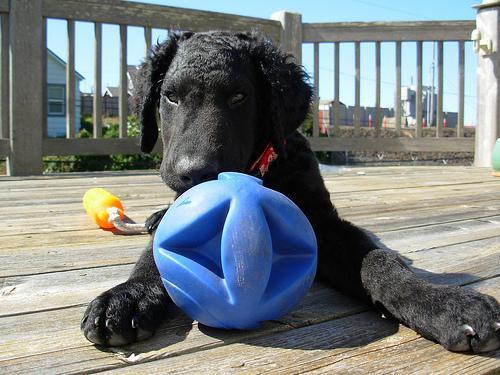
Curly-Coated Retriever
Trait scores
Health risk profile
Conditions below are ranked by documented prevalence and severity in the Curly-Coated Retriever. Risk level drives both veterinary costs and insurance pricing.
| Condition | Risk | What to know |
|---|---|---|
| Hip and elbow dysplasia | moderate | Standard large retriever risk; request OFA scores. |
| Cancer (lymphoma, hemangiosarcoma) | moderate | Elevated rates appear in breed health surveys; check lumps promptly. |
| Bloat (GDV) | moderate | Deep-chested athlete; feed measured meals and rest after eating. |
| Eye disease (PRA, cataracts) | moderate | Hereditary eye conditions occur; DNA and eye screening available. |
| Follicular dysplasia | low | Patchy coat thinning occurs in some lines; cosmetic rather than serious. |
Pet insurance for a Curly-Coated Retriever
Insurers price a Curly-Coated Retriever from the breed's documented claims profile — here, a clean bill of health with no dominant high-risk hereditary condition. Enrolling early matters more than shopping hard: no carrier covers a condition once it is diagnosed.
Annual cost of ownership
Excluding insurance, the recurring cost of a Curly-Coated Retriever is driven by how much it eats — which scales with body weight — and how much grooming it needs. At 60–95 lbs and a grooming score of 1/5, the Curly-Coated Retriever sits below the average dog on grooming spend. Chronic conditions from the risk table above can add substantially to the medical side of the budget — one reason breed-matched insurance matters. For the component-by-component breakdown, see the average cost of owning a dog, and model your own numbers with thecost of ownership calculator.
About the Curly-Coated Retriever
The Curly-Coated Retriever is the oldest and most self-possessed of the retrievers — an English water dog wrapped in tight, waterproof curls. It is more independent and reserved with strangers than a Lab or Golden, making it a better watchdog but a slightly more demanding student; training works best kept varied and fun. Exercise needs are high and swimming is a passion. The coat is genuinely low-maintenance: no brushing, occasional damp-downs. Suits active owners wanting a thinking person's retriever.
Origin: England
Temperament
Related reading for Curly-Coated Retriever owners
Curly-Coated Retriever FAQ
How long do Curly-Coated Retrievers live?
The typical Curly-Coated Retriever lifespan is 10–12 years. Diet, weight management, and screening for the breed's known hereditary conditions have the largest measurable effect on longevity.
How much does pet insurance cost for a Curly-Coated Retriever?
There is no published breed-level price for pet insurance, so we do not quote one. NAPHIA's 2026 industry report puts the US average at $836 a year — about $70 a month — for accident-and-illness coverage on a dog, and insurers price above or below that line based on your dog's age, your ZIP code, and the plan you configure. The Curly-Coated Retriever carries no dominant high-risk hereditary condition, which keeps it near or below that average. For real numbers, request quotes for your dog's exact age and ZIP code.
Is the Curly-Coated Retriever a good apartment dog?
Usually not. At 60–95 lbs with an energy level of 5/5, the Curly-Coated Retriever needs more space and daily exercise than most apartments can offer.
What health problems are Curly-Coated Retrievers prone to?
The most significant documented risks are Hip and elbow dysplasia, Cancer (lymphoma, hemangiosarcoma), Bloat (GDV). Ask breeders for the relevant health clearances and budget for insurance early, before any condition becomes pre-existing.