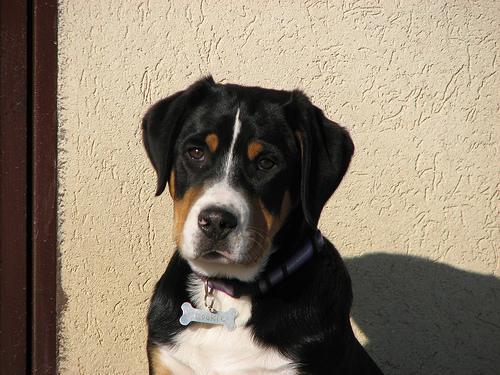
Greater Swiss Mountain Dog
Trait scores
Health risk profile
Conditions below are ranked by documented prevalence and severity in the Greater Swiss Mountain Dog. Risk level drives both veterinary costs and insurance pricing.
| Condition | Risk | What to know |
|---|---|---|
| Hip and elbow dysplasia | high | Very common in the breed; OFA clearances for both parents are essential. |
| Bloat (GDV) and splenic torsion | moderate | Deep-chested giant; know torsion signs and consider gastropexy. |
| Epilepsy | moderate | Idiopathic seizures occur at elevated rates; usually controllable with medication. |
| Urinary incontinence | moderate | Spayed females are predisposed; manageable with medication. |
| Osteochondritis dissecans (OCD) | low | Developmental joint cartilage disease in fast-growing puppies; feed for slow growth. |
Pet insurance for a Greater Swiss Mountain Dog
Monthly accident-and-illness premiums for a healthy adult Greater Swiss Mountain Dog, based on current rate data across major insurers. Enrolling early locks in coverage before breed-linked conditions become pre-existing.
Annual cost of ownership
Excluding insurance, budget $2,000–$3,400 per year for food, routine veterinary care, grooming, and supplies for a Greater Swiss Mountain Dog. Chronic conditions from the risk table above can add significantly to that range — one reason breed-matched insurance matters.
About the Greater Swiss Mountain Dog
The Greater Swiss Mountain Dog is the oldest and largest of Switzerland's four mountain breeds, a draft dog that pulled butcher and dairy carts to market. Swissies are gentle, sociable, and steady with children while remaining alert watchdogs. Grooming is easy and exercise needs moderate, but ownership is scaled up: heavy food bills, slow maturity, a short eight-to-eleven-year lifespan, and meaningful joint and bloat risk. Males can be boisterous through a long adolescence. Suits families with space wanting a friendly giant.
Origin: Switzerland
Temperament
Greater Swiss Mountain Dog FAQ
How long do Greater Swiss Mountain Dogs live?
The typical Greater Swiss Mountain Dog lifespan is 8–11 years. Diet, weight management, and screening for the breed's known hereditary conditions have the largest measurable effect on longevity.
How much does pet insurance cost for a Greater Swiss Mountain Dog?
Based on current rate data, expect to pay roughly $55–$100 per month for accident-and-illness coverage on a healthy adult Greater Swiss Mountain Dog. Premiums rise with age and vary by location and deductible.
Is the Greater Swiss Mountain Dog a good apartment dog?
Usually not. At 85–140 lbs with an energy level of 3/5, the Greater Swiss Mountain Dog needs more space and daily exercise than most apartments can offer.
What health problems are Greater Swiss Mountain Dogs prone to?
The most significant documented risks are Hip and elbow dysplasia, Bloat (GDV) and splenic torsion, Epilepsy. Ask breeders for the relevant health clearances and budget for insurance early, before any condition becomes pre-existing.