Greyhound
Trait scores
Health risk profile
Conditions below are ranked by documented prevalence and severity in the Greyhound. Risk level drives both veterinary costs and insurance pricing.
| Condition | Risk | What to know |
|---|---|---|
| Osteosarcoma (bone cancer) | high | Greyhounds, especially retired racers, carry one of the highest bone-cancer rates of any breed. |
| Bloat (GDV) | moderate | Deep, narrow chest raises gastric torsion risk; know the emergency signs. |
| Hypothyroidism | moderate | Common in the breed — but Greyhound thyroid panels normally read low, so diagnosis needs a sighthound-savvy vet. |
| Dental disease | moderate | Retired racers often arrive with significant tartar and extractions already needed. |
| Corns (toe keratomas) | low | Painful pad lesions unique to sighthounds cause chronic lameness in some dogs. |
Pet insurance for a Greyhound
Insurers price a Greyhound from the breed's documented claims profile — here, 1 high-risk condition, led by Osteosarcoma (bone cancer). Enrolling early matters more than shopping hard: no carrier covers a condition once it is diagnosed.
Annual cost of ownership
Excluding insurance, the recurring cost of a Greyhound is driven by how much it eats — which scales with body weight — and how much grooming it needs. At 60–70 lbs and a grooming score of 1/5, the Greyhound sits below the average dog on grooming spend. Chronic conditions from the risk table above can add substantially to the medical side of the budget — one reason breed-matched insurance matters. For the component-by-component breakdown, see the average cost of owning a dog, and model your own numbers with thecost of ownership calculator.
About the Greyhound
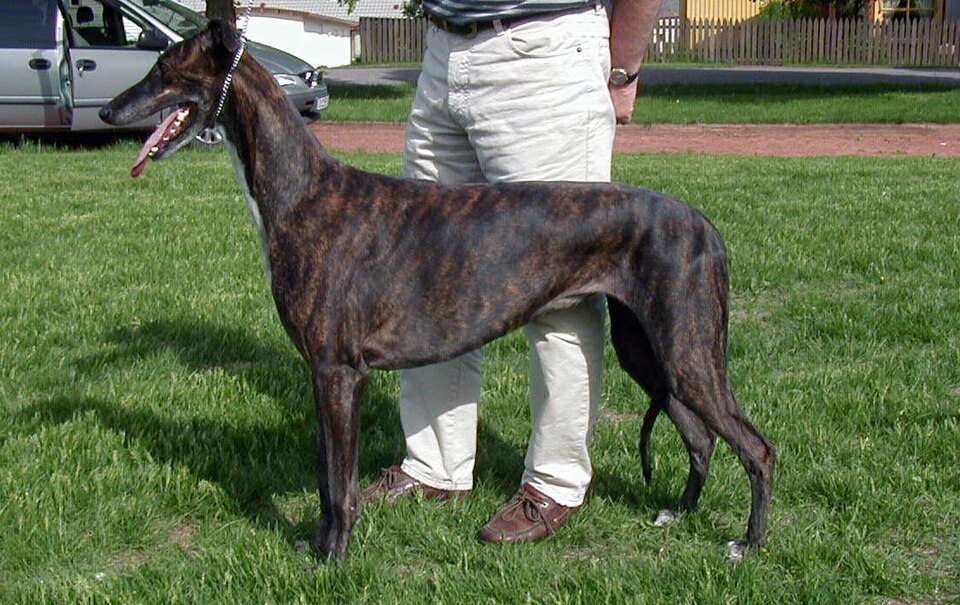
The Greyhound is the world's fastest dog and one of its laziest: a 45-mph sprinter that sleeps eighteen hours a day and asks only for a soft sofa and a daily walk. It is quiet, gentle, and clean indoors — an outstanding apartment dog despite the size — though prey drive toward small animals is hardwired and off-leash exercise requires secure fencing. Vet care has sighthound-specific traps: anesthesia sensitivity, naturally low thyroid and platelet readings, and elevated bone-cancer risk, especially in adopted racers. Suits calm households wanting a graceful, low-maintenance companion.
Origin: England (lineage to ancient Egypt)
Temperament
Related reading for Greyhound owners
Greyhound FAQ
How long do Greyhounds live?
The typical Greyhound lifespan is 10–13 years. Diet, weight management, and screening for the breed's known hereditary conditions have the largest measurable effect on longevity.
How much does pet insurance cost for a Greyhound?
There is no published breed-level price for pet insurance, so we do not quote one. NAPHIA's 2026 industry report puts the US average at $836 a year — about $70 a month — for accident-and-illness coverage on a dog, and insurers price above or below that line based on your dog's age, your ZIP code, and the plan you configure. The Greyhound carries 1 documented high-risk condition, which is the main reason a Greyhound policy prices above the national average. For real numbers, request quotes for your dog's exact age and ZIP code.
Is the Greyhound a good apartment dog?
Yes. With an energy level of 3/5 and a large build, the Greyhound adapts well to apartment living provided it gets daily walks.
What health problems are Greyhounds prone to?
The most significant documented risks are Osteosarcoma (bone cancer), Bloat (GDV), Hypothyroidism. Ask breeders for the relevant health clearances and budget for insurance early, before any condition becomes pre-existing.