Nova Scotia Duck Tolling Retriever
Trait scores
Health risk profile
Conditions below are ranked by documented prevalence and severity in the Nova Scotia Duck Tolling Retriever. Risk level drives both veterinary costs and insurance pricing.
| Condition | Risk | What to know |
|---|---|---|
| Hip dysplasia | moderate | Standard retriever risk; request OFA scores. |
| Progressive retinal atrophy | moderate | Inherited retinal degeneration; DNA testing identifies carriers. |
| Autoimmune disease (SRMA, Addison's) | moderate | Immune-mediated meningitis and adrenal disease occur at elevated rates in the breed. |
| Collie eye anomaly | moderate | Congenital eye defect present in the breed; DNA screening available. |
| Degenerative myelopathy | moderate | Late-onset spinal disease; a DNA test identifies at-risk dogs. |
Pet insurance for a Nova Scotia Duck Tolling Retriever
Insurers price a Nova Scotia Duck Tolling Retriever from the breed's documented claims profile — here, a clean bill of health with no dominant high-risk hereditary condition. Enrolling early matters more than shopping hard: no carrier covers a condition once it is diagnosed.
Annual cost of ownership
Excluding insurance, the recurring cost of a Nova Scotia Duck Tolling Retriever is driven by how much it eats — which scales with body weight — and how much grooming it needs. At 35–50 lbs and a grooming score of 2/5, the Nova Scotia Duck Tolling Retriever sits below the average dog on grooming spend. Chronic conditions from the risk table above can add substantially to the medical side of the budget — one reason breed-matched insurance matters. For the component-by-component breakdown, see the average cost of owning a dog, and model your own numbers with thecost of ownership calculator.
About the Nova Scotia Duck Tolling Retriever
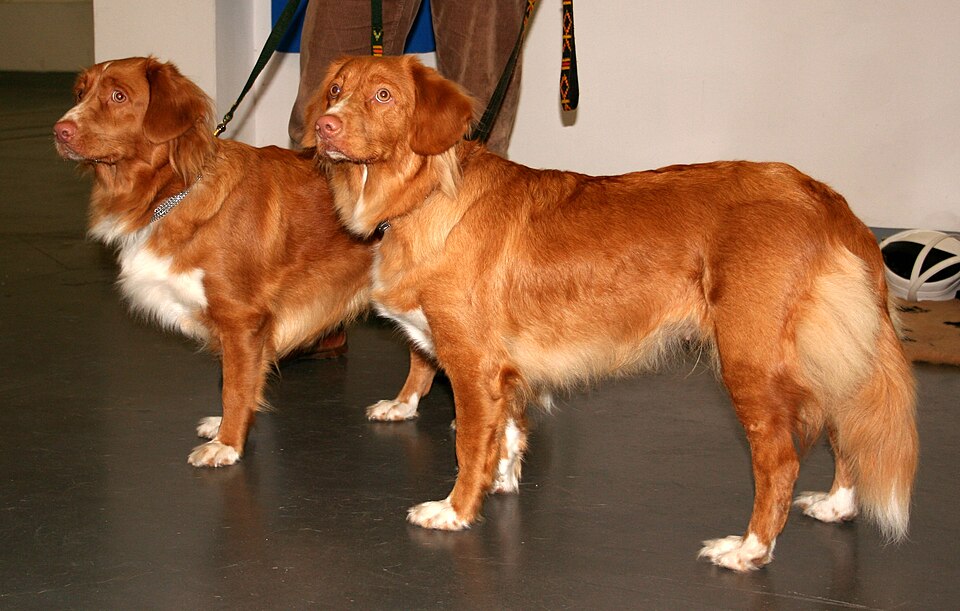
The Nova Scotia Duck Tolling Retriever is the smallest retriever, developed in Canada to lure ducks within gunshot by playing along the shoreline. Tollers are intense, brilliant, and affectionate with family but more reserved with strangers than a Golden; the piercing toller scream appears when excited. They need serious daily exercise, mental work, and water access ideally, plus tolerance for seasonal shedding. Some lines carry elevated autoimmune-disease risk, so breeder health screening matters. Suits active, outdoorsy owners and dog-sport enthusiasts.
Origin: Canada (Nova Scotia)
Temperament
Related reading for Nova Scotia Duck Tolling Retriever owners
Nova Scotia Duck Tolling Retriever FAQ
How long do Nova Scotia Duck Tolling Retrievers live?
The typical Nova Scotia Duck Tolling Retriever lifespan is 12–14 years. Diet, weight management, and screening for the breed's known hereditary conditions have the largest measurable effect on longevity.
How much does pet insurance cost for a Nova Scotia Duck Tolling Retriever?
There is no published breed-level price for pet insurance, so we do not quote one. NAPHIA's 2026 industry report puts the US average at $836 a year — about $70 a month — for accident-and-illness coverage on a dog, and insurers price above or below that line based on your dog's age, your ZIP code, and the plan you configure. The Nova Scotia Duck Tolling Retriever carries no dominant high-risk hereditary condition, which keeps it near or below that average. For real numbers, request quotes for your dog's exact age and ZIP code.
Is the Nova Scotia Duck Tolling Retriever a good apartment dog?
Conditionally. The Nova Scotia Duck Tolling Retriever can live in an apartment, but its 5/5 energy level means you'll need a consistent daily exercise routine.
What health problems are Nova Scotia Duck Tolling Retrievers prone to?
The most significant documented risks are Hip dysplasia, Progressive retinal atrophy, Autoimmune disease (SRMA, Addison's). Ask breeders for the relevant health clearances and budget for insurance early, before any condition becomes pre-existing.