Old English Sheepdog
Trait scores
Health risk profile
Conditions below are ranked by documented prevalence and severity in the Old English Sheepdog. Risk level drives both veterinary costs and insurance pricing.
| Condition | Risk | What to know |
|---|---|---|
| Hip dysplasia | moderate | Common enough that OFA screening is standard for breeding stock. |
| Bloat (GDV) | moderate | Deep-chested build; feed measured meals and rest after eating. |
| Cataracts | moderate | Hereditary lens opacity occurs; annual eye exams recommended. |
| Deafness | moderate | Congenital deafness appears at elevated rates; BAER testing available. |
| Hypothyroidism | moderate | Contributes to weight gain and coat changes; confirmed on bloodwork. |
Pet insurance for a Old English Sheepdog
Insurers price a Old English Sheepdog from the breed's documented claims profile — here, a clean bill of health with no dominant high-risk hereditary condition. Enrolling early matters more than shopping hard: no carrier covers a condition once it is diagnosed.
Annual cost of ownership
Excluding insurance, the recurring cost of a Old English Sheepdog is driven by how much it eats — which scales with body weight — and how much grooming it needs. At 60–100 lbs and a grooming score of 5/5, the Old English Sheepdog sits well above the average dog on grooming spend. Chronic conditions from the risk table above can add substantially to the medical side of the budget — one reason breed-matched insurance matters. For the component-by-component breakdown, see the average cost of owning a dog, and model your own numbers with thecost of ownership calculator.
About the Old English Sheepdog
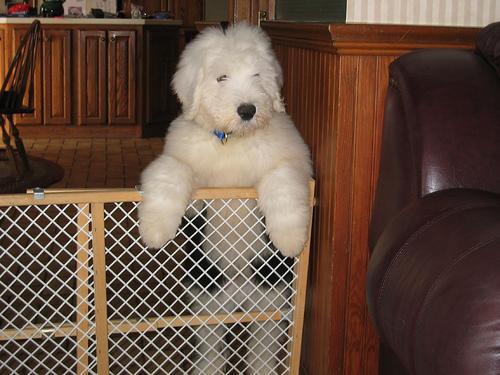
The Old English Sheepdog is an English drover's dog that moved cattle to market, instantly recognizable by its shaggy gray-and-white coat and rolling amble. Under the hair is a gentle, playful, and genuinely adaptable dog that adores children and settles well indoors given a daily walk. The coat is the dominant ownership cost: full coats mat within days without line-brushing, and professional grooming every six to eight weeks is effectively mandatory. Suits families who accept the grooming budget and the muddy-paw reality.
Origin: England
Temperament
Related reading for Old English Sheepdog owners
Old English Sheepdog FAQ
How long do Old English Sheepdogs live?
The typical Old English Sheepdog lifespan is 10–12 years. Diet, weight management, and screening for the breed's known hereditary conditions have the largest measurable effect on longevity.
How much does pet insurance cost for a Old English Sheepdog?
There is no published breed-level price for pet insurance, so we do not quote one. NAPHIA's 2026 industry report puts the US average at $836 a year — about $70 a month — for accident-and-illness coverage on a dog, and insurers price above or below that line based on your dog's age, your ZIP code, and the plan you configure. The Old English Sheepdog carries no dominant high-risk hereditary condition, which keeps it near or below that average. For real numbers, request quotes for your dog's exact age and ZIP code.
Is the Old English Sheepdog a good apartment dog?
Yes. With an energy level of 3/5 and a large build, the Old English Sheepdog adapts well to apartment living provided it gets daily walks.
What health problems are Old English Sheepdogs prone to?
The most significant documented risks are Hip dysplasia, Bloat (GDV), Cataracts. Ask breeders for the relevant health clearances and budget for insurance early, before any condition becomes pre-existing.